



In today’s digital-first world, mobile app development has become a critical factor for businesses aiming to expand their reach and enhance customer engagement. With billions of smartphone users worldwide, having a powerful, user-friendly, and scalable mobile app is no longer optional—it’s a necessity.
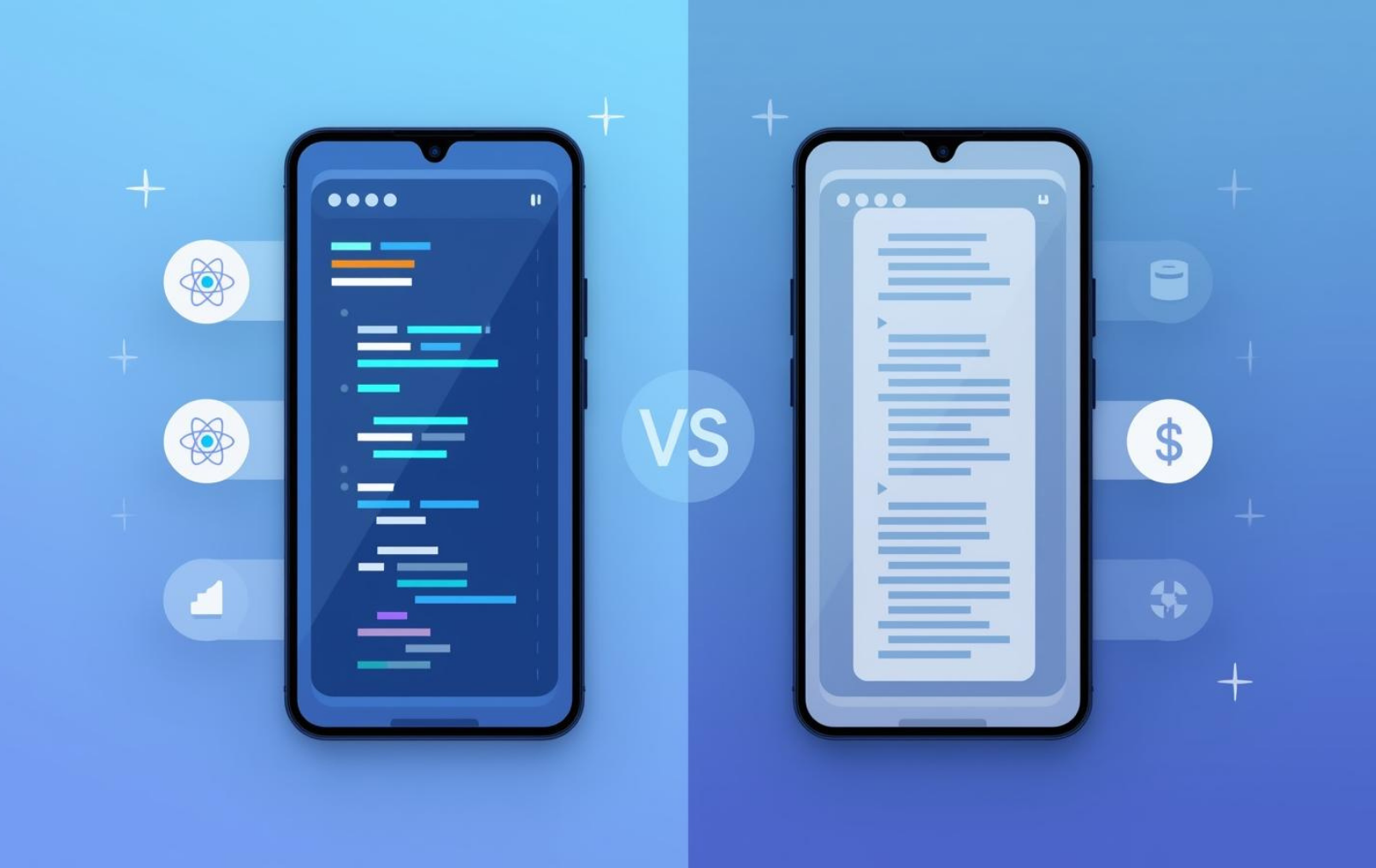
When it comes to building mobile apps, businesses often face a crucial decision: React Native vs. Native App Development. Choosing the right approach depends on your business goals, target audience, app complexity, performance requirements, and budget.
In this article, we’ll explore both React Native development services and native app development services in detail, comparing their advantages, limitations, and use cases to help you make an informed choice.
What is Native App Development?
Native app development refers to building mobile applications specifically for one platform, iOS or Android, using platform-specific programming languages and tools.
- For iOS: Developers use Swift or Objective-C with Apple’s Xcode.
- For Android: Developers use Kotlin or Java with Android Studio.
Native apps are designed to take full advantage of the device’s operating system, hardware, and built-in features, offering optimal performance and a seamless user experience.
Key Features of Native Apps:
- Direct access to device APIs, sensors, and hardware.
- Smooth animations and interactions.
- High-level performance for complex and graphics-heavy apps.
- Strict adherence to platform-specific UI/UX guidelines.
What is React Native App Development?
React Native, developed by Meta (Facebook), is an open-source framework for building cross-platform apps using JavaScript and React. Instead of writing two separate codebases for iOS and Android, developers can create a single codebase that runs on both platforms.
React Native uses a “learn once, write anywhere” approach, making it a cost-effective and time-saving choice for businesses that want to target both iOS and Android simultaneously.
Key Features of React Native Apps:
- A single codebase works across multiple platforms.
- Faster development cycles with hot reloading.
- Wide community support and third-party plugins.
- Near-native performance for most app categories.
React Native vs. Native App Development: A Detailed Comparison
Performance
Native Apps: Deliver top-notch performance, speed, and reliability because they’re built directly for the OS. Ideal for gaming apps, AR/VR applications, and heavy-data apps.
React Native Apps: Performance is good for most business apps, but can lag when dealing with complex animations, heavy graphics, or intensive background processes.
Development Time
Native Apps: Require separate codebases for iOS and Android, doubling development time and cost.
React Native Apps: Faster to build since one codebase works for both platforms, reducing time-to-market.
User Experience (UX/UI)
Native Apps: Follow platform-specific design guidelines (Material Design for Android, Human Interface Guidelines for iOS), ensuring a superior, platform-consistent user experience.
React Native Apps: Offer good UX, but customization for platform-specific look and feel may require additional development effort.
Access to Device Features
- Native Apps: Full access to device hardware, APIs, sensors, GPS, camera, etc.
- React Native Apps: Can access device features, but sometimes need additional third-party libraries or native code for deeper integrations.
Cost Efficiency
- Native Apps: More expensive since you need two teams (iOS & Android developers).
- React Native Apps: Cost-efficient because of shared codebase and reduced development time.
Maintenance & Updates
- Native Apps: Require separate maintenance for iOS and Android apps.
- React Native Apps: A Single codebase makes updates and bug fixes easier.
Community & Ecosystem
- Native Apps: Strong ecosystem backed by Google and Apple with constant updates.
- React Native: Huge open-source community, frequent updates, and rich third-party libraries.
When to Choose React Native?
React Native is the right choice if your business needs:
- A mobile app for both iOS and Android without doubling the budget.
- Faster development cycles to launch an MVP (Minimum Viable Product) quickly.
- A simple to moderately complex app (e.g., eCommerce apps, social media apps, content-driven apps).
- A scalable solution for startups and SMEs with limited resources.
Some of the most widely used mobile applications are built with React Native, proving its reliability and scalability. Popular examples include Instagram, which leverages React Native for seamless cross-platform features; Facebook, the framework’s creator, which uses it extensively in its mobile app; Skype, which ensures smooth communication across devices; and Uber Eats, which benefits from React Native’s fast development and efficient performance.
When to Choose Native App Development?
Go for Native development if your app requires:
- High performance and speed, such as gaming, AR/VR, or financial apps.
- Complex animations, 3D rendering, or advanced device integrations.
- A focus on platform-specific user experience for Android or iOS.
- Long-term scalability where performance is non-negotiable.
Leading mobile applications are developed natively to ensure top-notch performance and deep device integration. Examples include WhatsApp, which relies on native development for secure messaging and real-time communication; Spotify, which delivers high-quality audio streaming with a smooth user experience; Snapchat, known for its advanced AR filters and animations; and Pinterest, which offers fast, visually rich browsing through native optimization.
Cost Comparison: React Native vs. Native
| Factor | React Native | Native App Development |
| Development Cost | Lower (single team) | Higher (two teams needed) |
| Time To Market | Faster | Slower |
| Maintenance Cost | Lower | Higher |
| Performance | Good | Excellent |
| Scalability | Moderate | High |
Future Trends in Mobile App Development
- Hybrid & Cross-Platform Growth: Frameworks like React Native and Flutter are gaining popularity as businesses demand faster and cheaper development.
- AI & Machine Learning Integration: Mobile apps are becoming smarter with personalized recommendations and automation.
- 5G Technology: Faster networks will enable more sophisticated apps requiring high bandwidth.
- IoT & Wearables: Native apps may dominate IoT-driven use cases due to their need for deep hardware integration.
Making the Right Choice: React Native vs. Native
The decision between React Native and Native app development boils down to your business goals, budget, and app requirements.
- Choose React Native if you’re a startup or SME looking for a cost-effective, cross-platform solution with quick time-to-market.
- Choose Native Development if your app demands top-notch performance, complex features, and high scalability.
Partnering with the right mobile app development company can help you evaluate these options effectively and align your app with your long-term digital strategy.
Conclusion
Both React Native development services and native app development services have their unique strengths. React Native offers cost savings, faster development, and cross-platform compatibility, while Native development ensures unmatched performance, better UX, and full access to device capabilities.
At iCode49 Technolabs, we specialize in delivering both React Native app development services and native mobile app development services, ensuring that your app not only meets but exceeds user expectations. Whether you’re building an MVP for a startup or a feature-rich enterprise application, our expert developers will guide you in making the right mobile app development choice.
Looking to build your next mobile app? Contact us today to explore how our mobile app development services can transform your idea into a scalable digital product.
 Ahmedabad, INDIA
 1214, Rashmi Prime, Besides STC Building, Vakil Saheb Bridge, Ambli, Ahmedabad, Gujarat – 380058
 USA
USA Dubai, UAE
 Singapore
 WhatsApp
 Gmail
Gmail Contact no


