



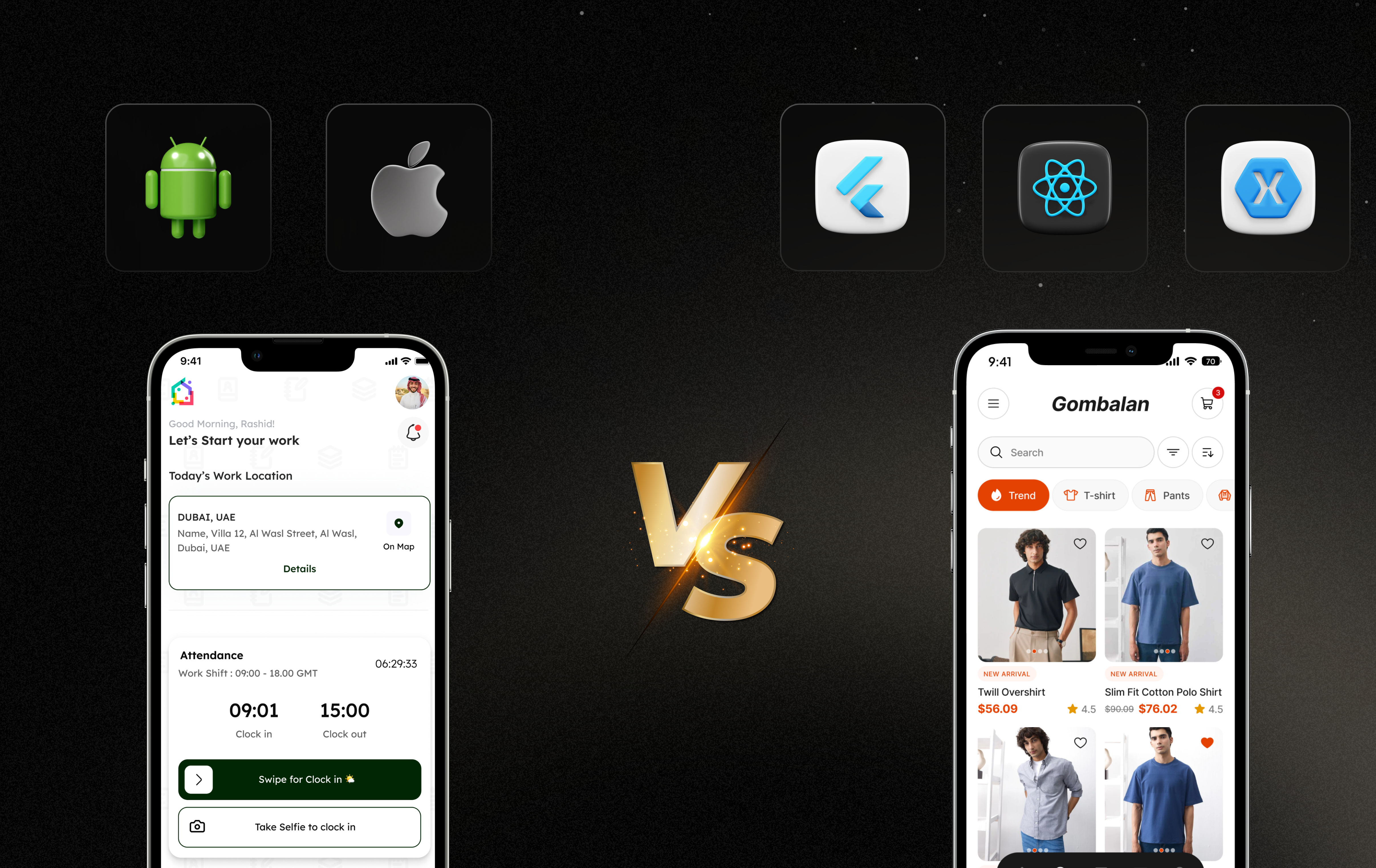
Choosing the right approach for your mobile app is one of the most critical decisions for your project’s success. It determines not only your app’s look and feel but also its performance, scalability, budget requirements, and user reach. The two most popular paths are native app development and cross-platform app development—each with distinct advantages, challenges, and trade-offs.
This comprehensive guide will break down everything you need to know about native vs. cross-platform mobile app development. We’ll analyze how each approach impacts key factors like user experience, performance, cost, time-to-market, scalability, and long-term maintenance. Real-world examples, case studies, and industry best practices will help you determine which mobile app development service, iOS app development, Android app development, or cross-platform app development is right for your project.
What is Native App Development?
Native app development is the process of building a mobile application specifically for one operating system—either iOS or Android—using the platform’s official tools, SDKs, and languages.
- iOS App Development Services: Native iOS apps are created using Swift or Objective-C with Apple’s Xcode development environment.
- Android App Development Services: Native Android apps are developed in Kotlin or Java, primarily using Android Studio.
With native app development, your application is designed to maximize the hardware and software capabilities of a single platform. This means your team can tap into features like device sensors, cameras, GPS, push notifications, Apple Pay, Google Maps, and more—right as they are released.
Pros of Native App Development
- Superior Performance: Native apps are directly compiled into the device’s machine code, eliminating third-party layers and delivering faster load times, smoother animations, and more reliability. For resource-intensive applications—such as gaming, AR/VR, or data-heavy productivity tools—a native approach ensures optimal speed.
- Best-in-Class User Experience: Native development follows Apple’s Human Interface Guidelines and Google’s Material Design principles, creating intuitive interfaces that feel “at home” on the device. UI transitions, gestures, and animations are more fluid and familiar to the user.
- Full Access to Device Features: Want to use Face ID on iPhones, integrate with Apple Watch, exploit the latest Android camera APIs, or support complex Bluetooth hardware? Native lets you leverage all available device features without restrictions or delays.
- Instant Adoption of OS Updates: When Apple and Google release new versions of their operating systems, native apps can immediately take advantage of the latest features, security upgrades, or UI enhancements—ensuring your users always get the best.
- Robust Security and Stability: Native apps utilize security protocols provided by the operating system and are not dependent on third-party plugins that could become outdated or introduce vulnerabilities.
Cons of Native App Development
- Higher Development Costs: Running two separate codebases for iOS and Android doubles your need for specialized developers, which can significantly increase your costs—especially during initial development and ongoing app maintenance.
- Longer Time-to-Market: Building, testing, and launching separate apps for each platform naturally takes longer. If speed is crucial or you’re racing competitors, this can be a constraint.
- Complex Maintenance: Any updates, bug fixes, or new features must be built for each platform individually, leading to more resources spent on QA, deployment, and support.
- Resource Intensive: Not only does development require two teams or skill sets, but ongoing training and platform updates must also be kept in sync.
What is Cross-Platform App Development?
Cross-platform app development services enable you to create a single codebase that runs on both iOS and Android, thanks to frameworks like Flutter, React Native, Xamarin, and more. This unified approach promises that you build once, and your app is available on multiple platforms.
- React Native (by Facebook): Uses JavaScript and lets developers build rich mobile apps with native components.
- Flutter (by Google): Uses Dart and renders UI components directly, allowing high performance and a “native feel.”
- Xamarin (by Microsoft): Uses C# and .NET, offering a robust framework for code sharing.
With cross-platform app development, you streamline your team, shorten your launch window, and significantly reduce development costs—all while providing an app experience that is close to native.
Pros of Cross-Platform App Development
- Cost Efficiency: Maintaining one codebase drastically cuts back on labor, training, and long-term maintenance. For startups and small businesses, cross-platform app development services make mobile apps attainable on tighter budgets.
- Faster Time-to-Market: Develop your app once and launch it on the Apple App Store and Google Play Store at almost the same time—great for MVPs, prototypes, or when capturing market share quickly is essential.
- Broad Audience Reach: Reach both Android and iOS users simultaneously. There’s no need to prioritize one audience over the other or delay the rollout to one platform.
- Simplified Updates and Maintenance: Bug fixes, new features, and changes are made once and instantly reflected on both platforms, streamlining deployment and reducing QA efforts.
- Consistent Brand Experience: Easily maintain UI/UX consistency across platforms—customize where needed, but preserve your brand’s key elements everywhere.
Cons of Cross-Platform App Development
- Performance Limitations: Despite advancements, apps built with cross-platform frameworks can’t always match native performance for resource-intensive features (complex graphics, high-speed gaming, AR/VR, real-time processing).
- Limited Device Feature Access: You may be unable to immediately access device-specific APIs and hardware features released in the latest OS updates. This often depends on when the framework providers implement support for these new features.
- Inconsistent User Experience: Achieving 100% platform-native look and feel is complex. Some UI elements or animation details may not map perfectly to their iOS or Android equivalents, resulting in occasional “oddness” or inconsistency.
- Framework Dependency: If your chosen framework (e.g., React Native) changes direction, becomes unsupported, or runs into compatibility issues with certain OS updates, your app’s long-term health could be affected.
- Bigger App Size: Frameworks often introduce additional libraries and abstraction layers, which can result in larger app binaries and potentially longer downloads for users.
Head-to-Head Comparisons: Native vs. Cross-Platform
Let’s go deeper and compare the two approaches across the most vital dimensions for business leaders and tech teams considering mobile app development.
1. Performance and Responsiveness
Native: Wins for any app demanding high-level animations, real-time syncing, background tasks, or advanced device integrations (think mobile games, financial tools, or medical imaging apps). Famous apps like WhatsApp, Instagram (originally), and Pokémon Go were built natively, ensuring top performance.
Cross-Platform: More than sufficient for most business, e-commerce, content delivery, and social media apps. Apps like Alibaba, Reflectly, and the new Facebook Ads Manager demonstrate solid speed, although resource-heavy mobile games or 3D experiences might encounter hiccups.
2. User Experience (UX) and Interface
Native: Delivers the finest polish. Apple and Google have invested heavily in platform-specific design languages. Native apps match device conventions for swipes, tabs, gestures, and transitions—users feel “at home” and learn faster.
Cross-Platform: Modern frameworks mimic native components quite closely, but subtle differences sometimes emerge, especially after major OS updates. Skilled developers can overcome many challenges, but absolute perfection can be elusive.
3. Time-to-Market
Native: Developing two apps doubles build, test, and deployment cycles. For large projects or complex functionalities, this can take six months to a year.
Cross-Platform: Often slashes development timelines by 30-50%. MVPs or simple apps may reach users in a few short weeks. If you want to test product-market fit, cross-platform app development services are invaluable.
4. Cost and Budget
Native: Generally, the more significant investment, considering dual codebases and teams. You’ll incur higher upfront costs and pay more for ongoing maintenance. However, this investment pays off if user experience and performance are make-or-break factors for your success.
Cross-Platform: Most organizations see 30–40% savings on initial development and maintenance by reusing code. Fewer bugs cross over, and updating features is streamlined.
5. Access to Device Features
Native: Unrestricted and instant access. For mobile health apps tapping into sensors, IoT like smartwatches, or bleeding-edge device features, native is the gold standard.
Cross-Platform: Catching up, but always a step behind OS releases. If using features like Apple’s ARKit or Google’s latest ML Kit is essential, verify framework compatibility before committing.
6. Scalability and Future-Proofing
Native: As your user base grows, native apps can scale seamlessly with OS updates and device evolutions—crucial for enterprise apps or when designing for wearables, TVs, or cars.
Cross-Platform: Great for early-stage startups, MVPs, and small-to-midsize businesses. Large, complex apps may hit the limits as demands or creative requirements increase.
Real-World Examples: Who’s Using What?
- Native App Development Success: Airbnb famously started native, experimented with React Native, and then returned to native code for its main product, citing edge-case performance challenges and UI/UX polish needs. Uber, Snapchat, and most high-performance games remain staunchly native for maximum speed and reliability.
- Cross-Platform App Development Success: Companies like Bloomberg, BMW, and Alibaba rely on cross-platform frameworks for consistency, faster updates, and cost control across their Apple and Android offerings. Flutter powers Google Ads and Reflectly; React Native is behind Facebook Ads Manager and Instagram’s “Explore” section.
How to Choose: Key Criteria for Your Mobile App Project
With so much on the line, your choice should align with your company’s goals, budget, timeline, and user demands. Consider these industry-inspired scenarios:
Choose Native App Development If:
- Your app requires top-tier performance, smoothest animations, real-time data synchronization, or AR/VR.
- You’re building a product with extensive integrations to hardware or complex platform-specific UI/UX.
- Security and stability are critical, such as in fintech, healthcare, or enterprise workflows.
- You have the resources for two codebases and want best-in-class longevity.
Choose Cross-Platform App Development If:
- You need to reach both iOS and Android markets as quickly and cost-effectively as possible.
- Your feature set is straightforward and does not rely on the latest device capabilities.
- You’re testing a new app concept or MVP and need fast market feedback.
- You want to minimize long-term maintenance complexity and can tolerate minor performance trade-offs.
Conclusion: Which Mobile App Development Service Will Power Your Success?
Native and cross-platform app development have both matured into reliable, capable options for building world-class mobile experiences. The decision ultimately hinges on your specific requirements for speed, scalability, cost, flexibility, and user experience quality.
If maximum performance, advanced integrations, or pixel-perfect UI are paramount—and you have the budget—specialized iOS app development services and Android app development services are unbeatable. When speed, budget, and broad market reach are top priorities, reputable cross-platform app development services that leverage tools like Flutter or React Native offer a compelling balance.
Before starting your mobile app development journey, outline your goals, must-have features, long-term vision, and available resources. Consult with ICode49 Technolabs experienced mobile app developers, review competitor products, and don’t be afraid to begin with a prototype or MVP. Whichever path you choose, prioritize quality and innovation to ensure your app stands out in the crowded digital marketplace.
 Ahmedabad, INDIA
 1214, Rashmi Prime, Besides STC Building, Vakil Saheb Bridge, Ambli, Ahmedabad, Gujarat – 380058
 USA
USA Dubai, UAE
 Singapore
 WhatsApp
 Gmail
Gmail Contact no


