



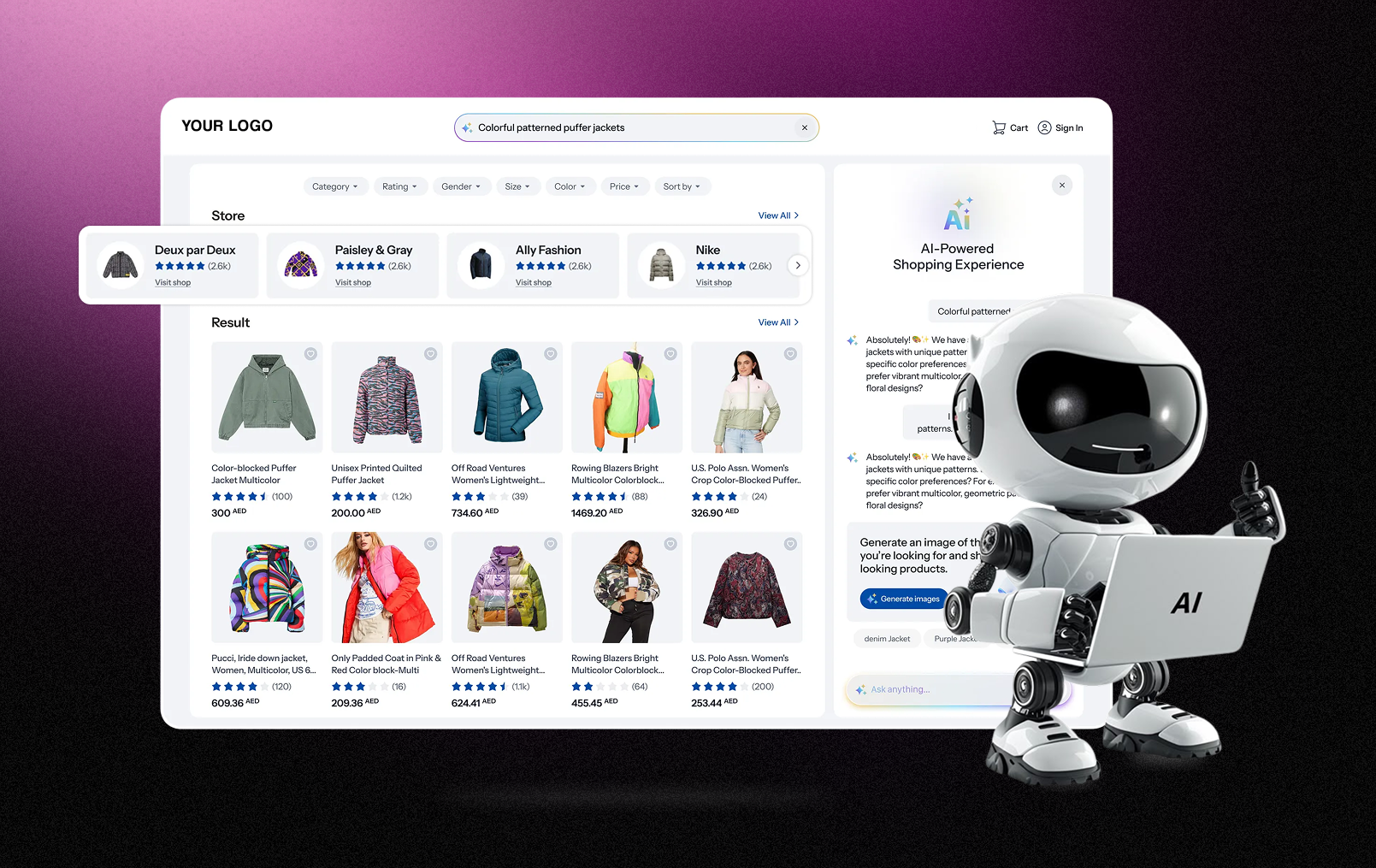
Scroll through any online store or open a streaming app, and it feels like the platform already knows what you want next. That’s not magic. It’s smart personalization powered by artificial intelligence.
For years, consumer brands have been trying to personalize marketing with manual data, guesswork, and broad customer buckets. But in 2025, those methods fall short. Customers now expect every interaction, from a product recommendation to a push notification, to feel relevant and timely. They’re not impressed by general offers anymore. They want to feel understood.
This is where AI-powered personalized marketing steps in. It allows brands to study behavior patterns, analyze intent, and deliver the right message at the right moment. Whether you’re a growing eCommerce startup or a global D2C player, using AI-driven personalization is no longer optional. It’s the only way to achieve personalized marketing at scale.
What once required entire teams of marketers and analysts can now be automated and optimized using machine learning models. The result is better conversions, loyal customers, and campaigns that adapt themselves. And for businesses aiming to start this transformation, working with an experienced AI development company ensures the technology actually delivers measurable results.
Why Traditional Personalization Fails at Scale
Most marketing teams believe they already “do personalization.” They segment audiences, schedule follow-ups, and tweak ad copies for different customer groups. But the truth is, those efforts barely scratch the surface.
Traditional personalization methods rely heavily on static customer segments and outdated data. Imagine trying to serve thousands of customers with one message that was written weeks ago. It may have worked in the early digital marketing era, but today’s buyers move too fast, switch devices constantly, and expect brands to keep up.
The real challenge isn’t knowing your customer. It’s keeping up with how quickly they change. This is where manual processes start breaking down. Even the most organized teams can’t possibly track real-time behavior, predict intent, and respond instantly without automation.
That’s why most brands struggle when trying to achieve personalized marketing at scale. Manual efforts turn chaotic beyond a certain volume of users. And when data sits scattered across tools like CRM systems, email platforms, and social dashboards, personalization becomes inconsistent and repetitive.
AI marketing automation fixes this. Instead of segmenting users into rigid groups, AI continuously learns from their interactions. It adapts campaigns automatically, deciding when, where, and how to reach each customer. For example:
- It can trigger personalized offers when a customer hesitates to complete a purchase.
- It can adjust website banners based on a user’s browsing history.
- It can even help choose the most effective channel for each message.
In short, traditional marketing reacts, while AI marketing anticipates. And that anticipation is what makes personalization truly scalable.
The Role of AI in Scaling Personalized Marketing
The real strength of artificial intelligence lies in its ability to turn marketing from a guessing game into a system of smart, data-backed decisions.
Understanding AI-Driven Personalization
AI-driven personalization works by gathering and analyzing customer data in real time. It studies buying patterns, browsing behavior, search intent, and even content engagement to predict what each customer is most likely to do next.
For example, if someone frequently browses eco-friendly products, the system can highlight sustainable options or send them an early-access offer for a green product line.
What makes this powerful is not just accuracy, but adaptability. AI learns and improves with every interaction, helping brands continuously refine their campaigns without extra manual work.
From Data to Experience
With AI marketing automation, marketing stops being reactive. Instead of waiting for customers to show interest, automation predicts and responds proactively. Combine that with predictive analytics in marketing, and brands can forecast demand trends, optimize product placements, and personalize communication at scale.
This approach fuels AI-powered personalized marketing campaigns that evolve automatically as your audience evolves. It also boosts AI for customer engagement, ensuring every customer feels seen, heard, and valued.
Key Use Cases of AI-Powered Personalized Marketing
Artificial intelligence is redefining how they connect, sell, and retain customers. Here are the most practical ways consumer brands are already using AI-powered personalized marketing to stand out.
Hyper-Personalization with AI
Hyper-personalization with AI takes customer understanding beyond names and demographics. It uses real-time behavioral data to tailor every touchpoint.
For instance:
- A fashion retailer can suggest outfits based on past purchases and the current season.
- A food delivery app can reorder menu displays based on a user’s ordering times and taste preferences.
This level of personalization improves engagement, boosts retention, and makes the customer feel truly understood.
Predictive Campaign Optimization
With predictive analytics in marketing, AI can determine which campaigns will perform best even before they launch.
It helps marketers decide:
- The right time to send a message
- The type of offer most likely to convert
- The audience segment that needs reactivation
This approach saves time, reduces waste, and delivers higher ROI on marketing spend.
Omnichannel Personalization
Customers jump between platforms all day, be it Instagram, mobile apps, websites, or emails. AI keeps these experiences consistent.
By using AI marketing automation, brands can create unified campaigns that follow a customer wherever they go. The tone, message, and offer stay relevant, creating a seamless journey across touchpoints.
Each of these use cases shows one clear truth: personalization is no longer about sending the right message to the right person; it’s about doing it at the right time, every time.
Building a Scalable Personalization System with AI
To make personalization truly scalable, brands need the right setup and not just algorithms. The foundation lies in clean data, effective technology integration, and dependable partners who can make AI work across every marketing touchpoint.
Integrating AI into Existing Marketing Systems
Most businesses already use tools like CRMs, email platforms, and analytics dashboards. The key is to connect these tools so that data flows freely and insights move in real time.
That’s where AI integration services play a major role. They allow existing marketing systems to talk to each other and exchange insights automatically. This reduces manual coordination and creates a single view of every customer.
When systems are integrated properly, AI marketing automation can personalize messages across channels, all at once.
Partnering with the Right AI Development Company
Technology alone doesn’t make personalization successful. The strategy behind it matters just as much. A reliable AI development company helps brands identify what data to use, what patterns to track, and what personalization logic delivers the best results.
Some even offer custom AI development services that tailor models to a brand’s industry or audience type. This is especially useful for brands with unique customer journeys; for example, travel platforms, healthcare services, or lifestyle retailers.
Here’s a quick look at how it all comes together:
| Step |
Focus Area |
AI Advantage |
| 1 | Data Consolidation |
Unified customer view |
| 2 | Integration |
Smooth connection between tools |
| 3 | Personalization Logic |
Smarter targeting with machine learning |
| 4 | Automation |
Campaigns that adapt in real time |
A clear structure like this makes sure personalization grows with your audience, not against it.
Measuring the Impact of AI-Driven Personalization
Once AI takes over personalization, measurement becomes simpler, sharper, and far more accurate. Every campaign action leaves a trace, and every trace tells you how well your strategy is working.
The most successful brands using AI-powered personalized marketing focus on clear, measurable metrics rather than surface-level numbers.
Here’s what they track:
- Engagement rate: How much customers interact with personalized content across emails, ads, and apps.
- Conversion rate: How effective AI-driven recommendations or messages are in driving actual purchases.
- Customer lifetime value: Whether personalized interactions are improving long-term loyalty and repeat sales.
- Cost per acquisition: How automation through AI marketing automation reduces overall marketing costs.
A good AI development company helps brands set up dashboards that make these metrics visible in real time. With the help of predictive analytics in marketing, they can even forecast performance before launching a campaign.
Quick Insight:
- Personalized product recommendations can increase sales by up to 20%.
- Automated, behavior-based emails perform nearly twice as well as standard campaigns.
These numbers show one thing clearly: personalization isn’t just about creativity anymore. It’s about precision powered by AI.
The Future of AI-Powered Consumer Engagement
The future of marketing is not about sending more messages. It’s about sending smarter ones. As customers grow more conscious about privacy, authenticity, and brand trust, AI is evolving to meet those expectations head-on.
Tomorrow’s personalization will go beyond showing products or offers. It will understand emotions, context, and timing. For example, AI for customer engagement will soon be able to detect when users are losing interest and respond with fresh, tailored interactions that bring them back.
Brands that adopt AI-driven personalization early are already ahead. They use tools that adjust tone, visuals, and delivery timing automatically based on user mood and intent. This not only boosts engagement but also builds emotional loyalty, something traditional marketing can’t replicate.
The best part is accessibility. Advanced AI development services and affordable AI integration services are making it possible for even mid-sized consumer brands to implement personalization strategies that once required enterprise budgets.
The message is clear: the sooner a brand starts integrating AI into its customer engagement efforts, the longer it stays relevant in a world that rewards meaningful, personalized connections.
Final Takeaway
Personalization has moved from being a marketing tactic to becoming the very core of customer engagement. The challenge is no longer whether brands should personalize, but how fast they can scale it.
With AI-powered personalized marketing, businesses finally have the technology to understand every customer, anticipate their needs, and connect in real time. Whether you’re a D2C brand looking to improve conversions or an enterprise optimizing large-scale campaigns, AI-driven personalization is your growth engine.
Partnering with the right AI development company ensures this journey is not just technically sound but strategically impactful. With expert AI integration services and custom AI development services, you can transform how your marketing operates, from reactive to predictive, from static to dynamic, and from generic to deeply personal.
If you’re ready to build smarter, data-driven marketing systems that connect with every customer on a personal level, iCode49 can help you make it happen.
 Ahmedabad, INDIA
 1214, Rashmi Prime, Besides STC Building, Vakil Saheb Bridge, Ambli, Ahmedabad, Gujarat – 380058
 USA
USA Dubai, UAE
 Singapore
 WhatsApp
 Gmail
Gmail Contact no


